Loading...
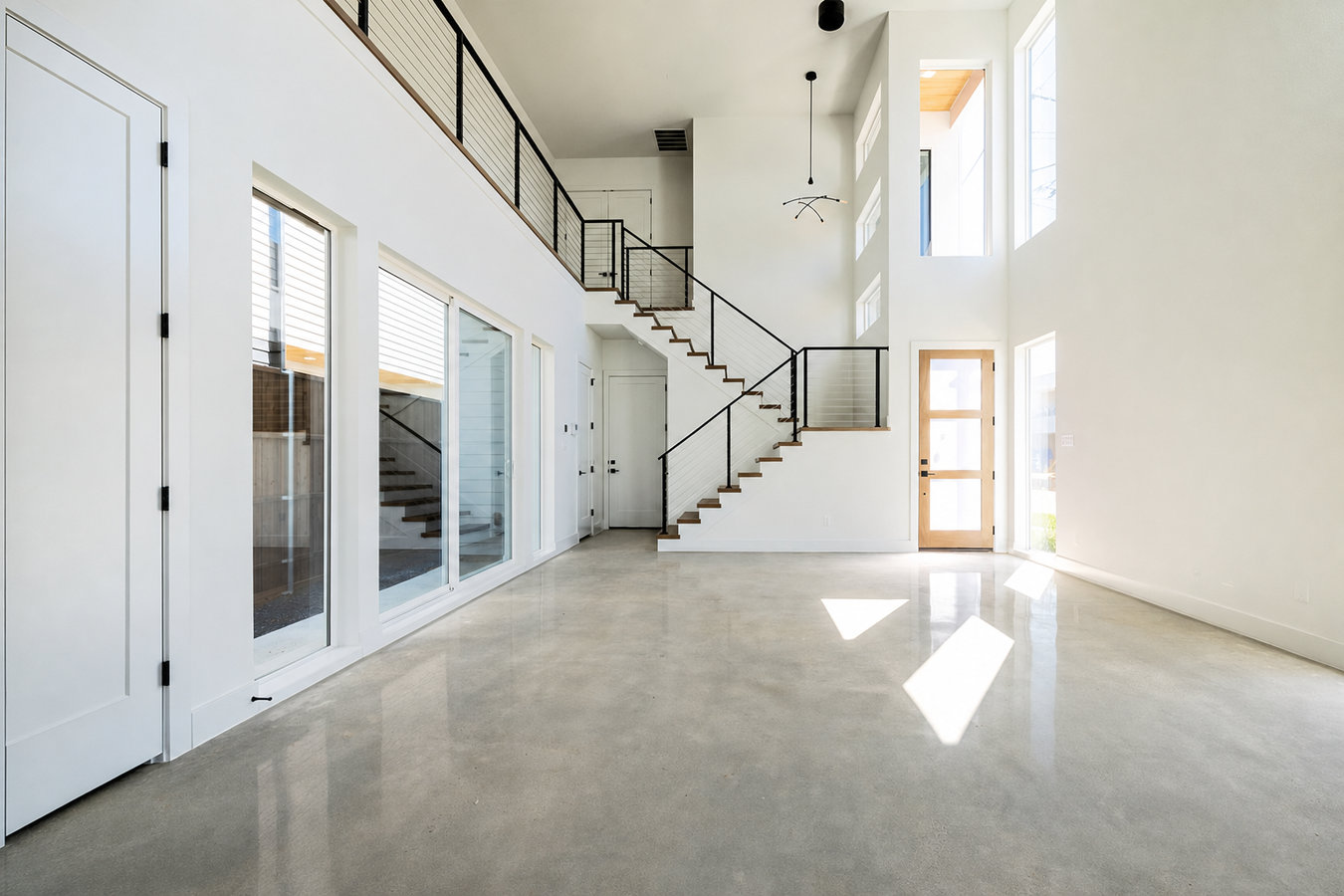
When standard epoxy is not enough - moisture, heat, or heavy daily use - urethane cement is the coating that holds. We install it right over your existing slab, no demo required.
Urethane cement flooring in Atwater is a thick, seamless coating poured directly over your existing concrete slab. It creates a surface that handles moisture coming up from below, holds up in sustained heat, and resists the heavy daily use that causes standard epoxy to fail. Most residential installations take two to three days and end up between one-quarter and three-eighths of an inch thick - not enough to affect door clearances.
If your garage or utility space has ever felt damp, shown white mineral patches on the floor, or had an epoxy coating peel up from the edges, urethane cement addresses the root cause rather than covering it over. It is also the right call for workshops, outbuildings, and any space that sees equipment, vehicles, or cleaning chemicals on a regular basis. If you are still deciding between options, our polished concrete flooring and commercial and industrial epoxy coatings are worth comparing side by side with urethane cement.
We work with homeowners and small business owners across Atwater and Merced County, and we are familiar with the slab conditions that come with the area's older housing stock and clay-heavy soils.
If you notice a fine gray powder on your garage floor after sweeping, or small chunks of the surface breaking away, the concrete is deteriorating from the top down. This is common in Atwater homes with older slabs that have been through decades of temperature swings and vehicle fluids. A urethane cement coating applied over properly prepared concrete stops that deterioration and gives you a surface that holds up going forward.
White chalky patches on your concrete floor - especially after rain or in the cooler months - are moisture working its way up through the slab and leaving mineral residue behind. In Atwater, where irrigation and seasonal groundwater levels fluctuate, this is a real and common issue. Urethane cement is one of the few coatings that can tolerate this kind of moisture vapor, making it a better long-term solution than standard epoxy.
A few hairline cracks in a concrete slab are normal and not necessarily a problem. But if you are noticing new cracks appearing, or existing ones seem wider than they were last year, the slab may be responding to soil movement underneath - something that happens in Atwater's clay-heavy soils as the ground wets and dries through the seasons. A contractor can assess whether the cracks are stable enough for a coating or whether the slab needs repair work first.
If a previous epoxy or paint coating is lifting at the edges, bubbling in spots, or has turned yellow from heat or sun exposure, it has reached the end of its useful life. Peeling coatings are also a slip hazard. Removing the old coating and installing urethane cement properly is a more durable solution than patching or recoating over a failing surface.
Every urethane cement job we do starts with the same foundation: mechanical surface preparation. We grind or shot-blast the concrete to open up the surface pores so the coating has something solid to grip. That step is not optional - it is what separates a floor that lasts a decade from one that delamminates within a year. After prep, we fill cracks and damaged areas, then pour and trowel the urethane cement layer across the floor in sections.
We also install polished concrete flooring for customers who want a high-gloss, low-maintenance finish without any coating, and our commercial and industrial epoxy floor coatings are the right fit for facilities that need color, chemical resistance, and a smooth finish without the moisture-tolerance advantage of urethane cement. We will walk you through the differences and help you choose what actually fits your slab and your usage.
Best for garages, laundry rooms, and utility spaces that need a tough, moisture-tolerant surface without high-gloss aesthetics.
A smart choice for spaces that get wet regularly - fine aggregate is broadcast into the surface during installation to add grip without affecting durability.
For slabs with visible damage, we fill and stabilize cracks as part of the prep phase - so the coating bonds to a solid surface, not a compromised one.
Urethane cement is available in neutral grays, tans, and custom tones - practical for homeowners who want a finished look that matches their space.
Two things about Atwater push homeowners toward urethane cement over standard epoxy: moisture and heat. The soils across Merced County include expansive clay-type soils that swell when wet and shrink when dry. That seasonal movement stresses concrete slabs and creates the hairline cracks that are common in older Atwater neighborhoods. Moisture also works its way up through slabs during the wetter months - especially in homes near irrigated farmland - leaving white mineral deposits and, eventually, causing standard epoxy to peel. Urethane cement is engineered to handle moisture vapor from below, which means it is not fighting the same losing battle in these conditions. On the heat side, urethane cement holds up through the sustained temperatures that Atwater sees from June through September far better than most epoxy systems.
Atwater also has a strong agricultural and light-industrial character, and many homeowners here run equipment, vehicles, or small operations from their garages and outbuildings. Urethane cement is one of the few residential-grade coatings tough enough to handle that kind of use. We serve customers across the area, including homeowners in Livingston and Los Banos who are dealing with the same soil conditions and older slab issues.
Call or submit the contact form and we will follow up within one business day. We will ask about the size of the space, what it is used for, and whether you have noticed any moisture or cracking - so the site visit is as useful as possible.
We come out and inspect the concrete in person - checking for cracks, moisture signs, old coatings, and any areas that need repair before the installation. This is the only way to give you an accurate price. A contractor who quotes over the phone without looking at your slab is guessing.
On installation day, the crew grinds or mechanically prepares the entire floor before any coating material is mixed. Cracks and damaged areas are filled at this stage. This is the step that most determines whether your floor lasts - we do not skip or rush it.
The urethane cement mixture is poured and troweled across the floor in sections. Light foot traffic is possible within 24 hours, but plan on keeping vehicles and heavy equipment off the floor for 48 to 72 hours. Before the crew leaves, we walk the finished floor with you so you know exactly what to expect.
We look at your slab, answer your questions, and give you a written price before you commit to anything. Spring and fall fill up fast - reach out now to hold your spot.
A lot of Atwater homes were built between the 1950s and 1980s, and we have seen what older slabs look like in this area - oil contamination, surface cracks from soil movement, prior coatings that did not bond correctly. We assess those conditions before quoting so you get a price based on your actual floor, not an average. The American Concrete Institute publishes guidance on moisture testing and slab assessment that informs how we approach each job.
We never give a firm price without an in-person look at your concrete. Older Atwater slabs can have issues that only show up on-site - and those issues affect the cost of proper prep. You will get a written estimate that reflects the actual job, so the number you agree to is the number you pay.
We grind or mechanically prepare every floor before any coating material is mixed. That means running equipment across the entire surface to open up the concrete - not just a quick sweep. If a contractor shows up and goes straight to pouring, they are skipping the step that makes the coating last. We will not do that. For context on surface preparation standards, the Concrete Decor Institute covers preparation requirements in detail.
We hold a valid California contractor license and operate out of Atwater - not a distant metro area. You can verify our license through the California Contractors State License Board at cslb.ca.gov. Being locally based means we are accountable to our neighbors, not just to a distant business address.
Experience with local slab conditions, transparent pricing, thorough prep, and a valid state license - those four things together are how a floor coating project goes from a good idea to a floor that holds up for years.
A low-maintenance, high-gloss option that works the existing concrete rather than coating over it - worth comparing if your slab is in solid condition.
Learn MoreHigh-build epoxy systems for commercial and industrial spaces that need chemical resistance, color options, and a smooth cleanable surface.
Learn MoreSpring and fall booking fills quickly - contact us now to hold your installation window before the best dates are gone.