Loading...
Old paint, peeling coatings, and stuck-on adhesive have to come off before any new floor finish can bond and last. We strip concrete floors down to bare, clean concrete - so whatever goes on next actually sticks.
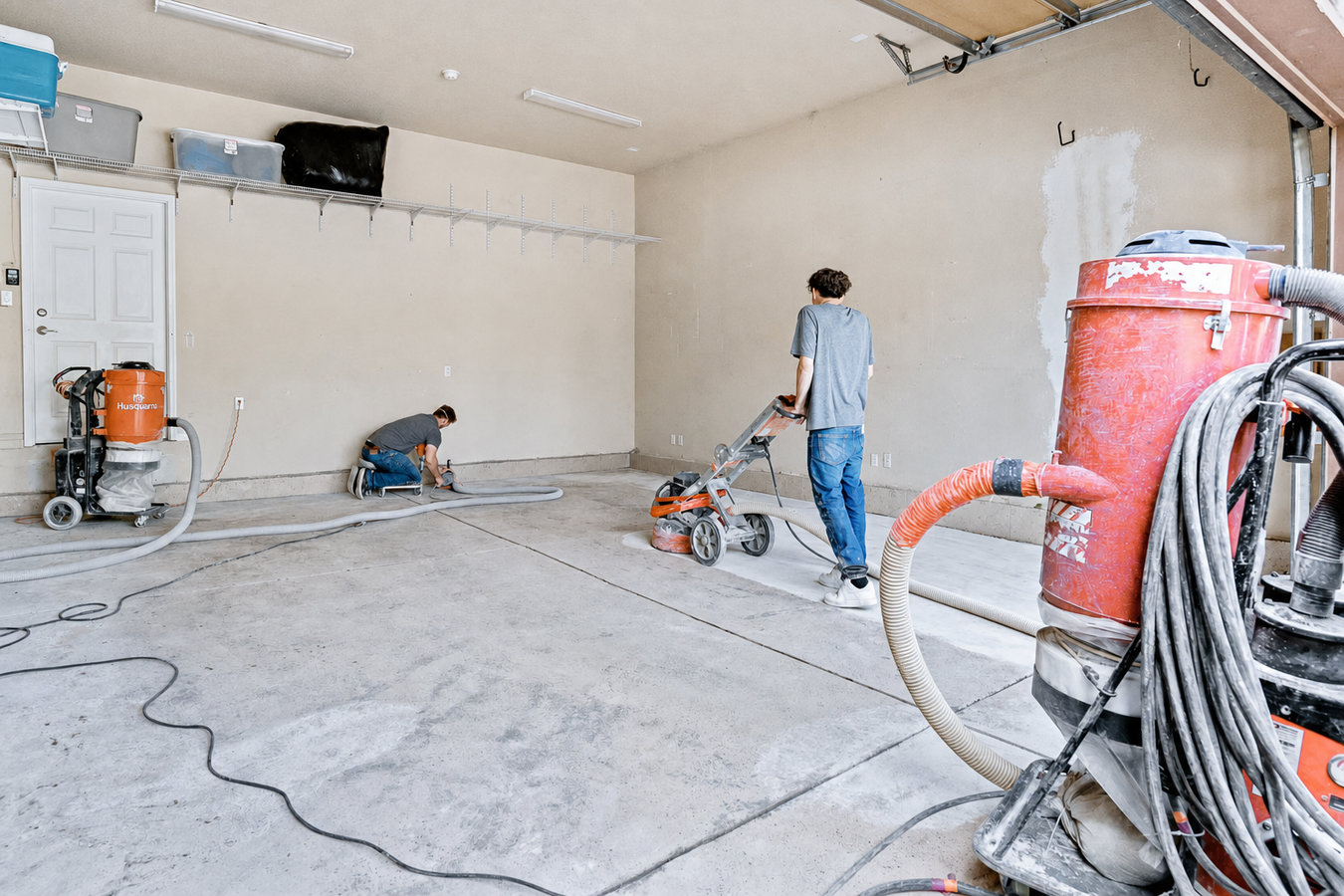
Concrete floor stripping in Atwater, CA is the process of removing old coatings, sealers, paint, adhesive, or surface layers from a concrete slab so it is clean and ready for whatever comes next - most standard garage or single-room jobs are complete in one day, with the floor ready for a new coating or finish within one to two days after.
The most important thing to understand about stripping is why it matters. If you apply a new coating - epoxy, sealer, or anything else - over an old one that has lost its bond with the concrete, the new layer will fail just as fast. It does not matter how good the product is or how carefully it is applied. A poorly prepared surface is the single most common reason garage floors and basement finishes fail within the first year. Stripping gets the old material off so the new one has clean, bare concrete to grip.
In Atwater, where many homes were built between the 1950s and 1980s, floors often have multiple generations of paint, sealer, and adhesive that have never been professionally addressed. Once the floor is stripped and prepped, concrete grinding and surface preparation finishes the job by profiling the slab to the exact texture a new coating needs to bond correctly.
If the paint or sealer on your garage floor is lifting, bubbling, or coming off in large flakes, the old coating has lost its bond with the concrete underneath. Painting or resealing over it will not fix the problem - the new layer will peel just as fast as the old one. The only real solution is to strip everything off and start fresh on bare concrete.
If carpet, vinyl tile, or linoleum was pulled up and left behind a layer of dark, rubbery adhesive, that residue has to come off before any new flooring goes down. New flooring laid over old adhesive will not sit flat and may not bond at all. This is one of the most common reasons homeowners in older Atwater homes call for stripping work.
In Atwater's intense summer heat, moisture moving up through a slab can weaken the bond between the concrete and any coating on top of it. If you tap on your floor and hear a hollow sound in certain areas, or if the surface feels slightly soft underfoot, the coating has likely separated from the slab. That is a sign the surface needs to be stripped and the moisture issue addressed before anything new goes on.
Any professional-grade flooring system requires a clean, bare concrete surface to bond correctly. If your floor currently has paint, sealer, or adhesive on it, stripping is not optional - it is the first step. Skipping it is the single most common reason new garage floors and basement finishes fail within the first year.
We handle stripping work for residential garages, basements, utility rooms, and commercial floors across Atwater and the surrounding Merced County area. Every job starts with a floor assessment - checking the condition of the existing coating, testing for moisture coming up through the slab, and noting any cracks, oil contamination, or problem areas before any equipment turns on. In Atwater, where older homes often have lead-containing paint on their floors, we follow California's safety requirements for testing and containment before grinding begins. Proper waste disposal, including regulated materials, is handled as part of every job.
Stripping is almost always the first step before a larger floor project. Once the slab is clean, epoxy floor coatings give you a durable, attractive finish in a garage or commercial space. And if the stripped slab needs additional profiling or leveling before a coating can go down, concrete grinding and surface preparation completes that final step so the new finish bonds the way it is supposed to.
Best for removing old paint, thin coatings, and sealers from a floor that will receive epoxy, polished concrete, or a decorative overlay afterward.
Suited to larger floor areas or surfaces with heavier coatings - strips and profiles the concrete surface in a single pass for faster coverage.
The right approach for coatings that mechanical grinding alone cannot remove, or for situations where minimizing dust is a priority during the removal process.
Recommended for floors where old tile, carpet, or sheet flooring left behind sticky residue that must come off before any new flooring or coating can be installed.
A significant share of Atwater's housing stock was built between the 1950s and the 1980s, during and after the Castle Air Force Base years. Homes from that era often have multiple generations of paint, sealer, and adhesive on their garage and basement floors - sometimes four or five layers deep - because the floors were repainted or resealed each time the previous coat started failing without anyone removing the old material first. More layers mean more time, more passes with the equipment, and a higher cost. If your home was built before 1980, it is reasonable to budget for the job taking longer than it would in a newer home. We work regularly in Merced and Livingston where the same older housing conditions and agricultural floor contamination come up just as frequently.
Atwater is also surrounded by active farmland in Merced County, and garages and outbuildings here often have oil, agricultural dust, and pesticide residue ground into the concrete surface over many years. This kind of contamination does not just affect appearance - it actively prevents new coatings from bonding, even after the surface layer is ground off. A contractor familiar with Central Valley conditions accounts for this during surface testing and prep rather than discovering it after the coating starts peeling. Atwater's intense summer heat adds one more local factor: the heat pushes moisture vapor upward through slabs, and a floor that was stripped without a moisture test is a floor that may bubble and fail well before its first anniversary.
We will ask a few quick questions - the size of the space, what is currently on the floor, and what you plan to do with it afterward. Expect a response within 1 business day. From there we schedule an on-site visit, because no contractor can quote a stripping job accurately without seeing the floor in person.
We walk the floor, check for moisture coming up through the slab, identify what the existing coating is made of, and note any cracks, oil contamination, or potential lead issues based on the home's age. You get a written estimate that explains what method we will use and why - not just a number.
Before work day, remove all furniture, stored items, and vehicles from the space. The more cleared out the room is, the faster the crew can work. We will tell you exactly what needs to be done - if anything is unclear, just ask. A clear space also means dust containment works better.
The crew brings in grinders, vacuums, and any chemical stripping agents needed. Dust collection runs the entire time. After stripping, we vacuum the area and do a final pass to confirm the surface is uniform - no shiny patches, no sticky spots, no areas where the old coating is still visible. Walk the floor with us before we leave and point out anything that does not look right.
We respond within 1 business day, provide free written estimates, and tell you honestly what your floor actually needs - not what costs the most.
Atwater's summer heat is well known for pushing moisture vapor up through concrete slabs - and a floor coated without first testing for this moisture will bubble and peel before the season ends. We test every floor before any work begins, so the prep accounts for what is actually happening beneath the surface, not just what is visible on top.
A meaningful portion of Atwater's housing stock predates 1978, when lead-based paint was common. California requires specific safety steps before grinding begins on surfaces that may contain lead. We ask about your home's age, test when appropriate, and follow the required procedures - protecting your family and keeping your project compliant. The California Department of Public Health provides guidance on lead-safe practices for older homes.
Garages and outbuildings in Atwater and Merced County regularly have oil, farm equipment residue, and agricultural dust ground into the concrete surface over many years. We assess for contamination during the walkthrough and use the right method to remove it - because oil-saturated concrete will reject any new coating no matter how well it is applied. Proper waste disposal, including regulated materials, is handled as part of every project in compliance with CalRecycle requirements.
Floors in older Atwater homes often have layers of old coatings and contamination that are not visible until the assessment. We walk every floor in person, tell you what we find, and give you a written quote that reflects the actual condition of your floor - so the price you agree to does not change when the work uncovers what was hiding underneath.
Stripping is the foundation that every other floor project depends on. We have handled floors in Atwater with everything from a single peeling paint layer to five decades of accumulated coatings and agricultural contamination. That range of experience means we show up prepared for what your floor actually is - not what it looks like in an optimistic estimate.
Apply a durable, attractive epoxy finish to a freshly stripped concrete slab in a garage, basement, or commercial space.
Learn MoreProfile and level a stripped concrete slab to meet the surface standards required before any coating or flooring system is installed.
Learn MoreGet a free, no-pressure estimate from a local contractor who knows Atwater floors - call today and get the job on the calendar before the summer heat sets in.