Loading...
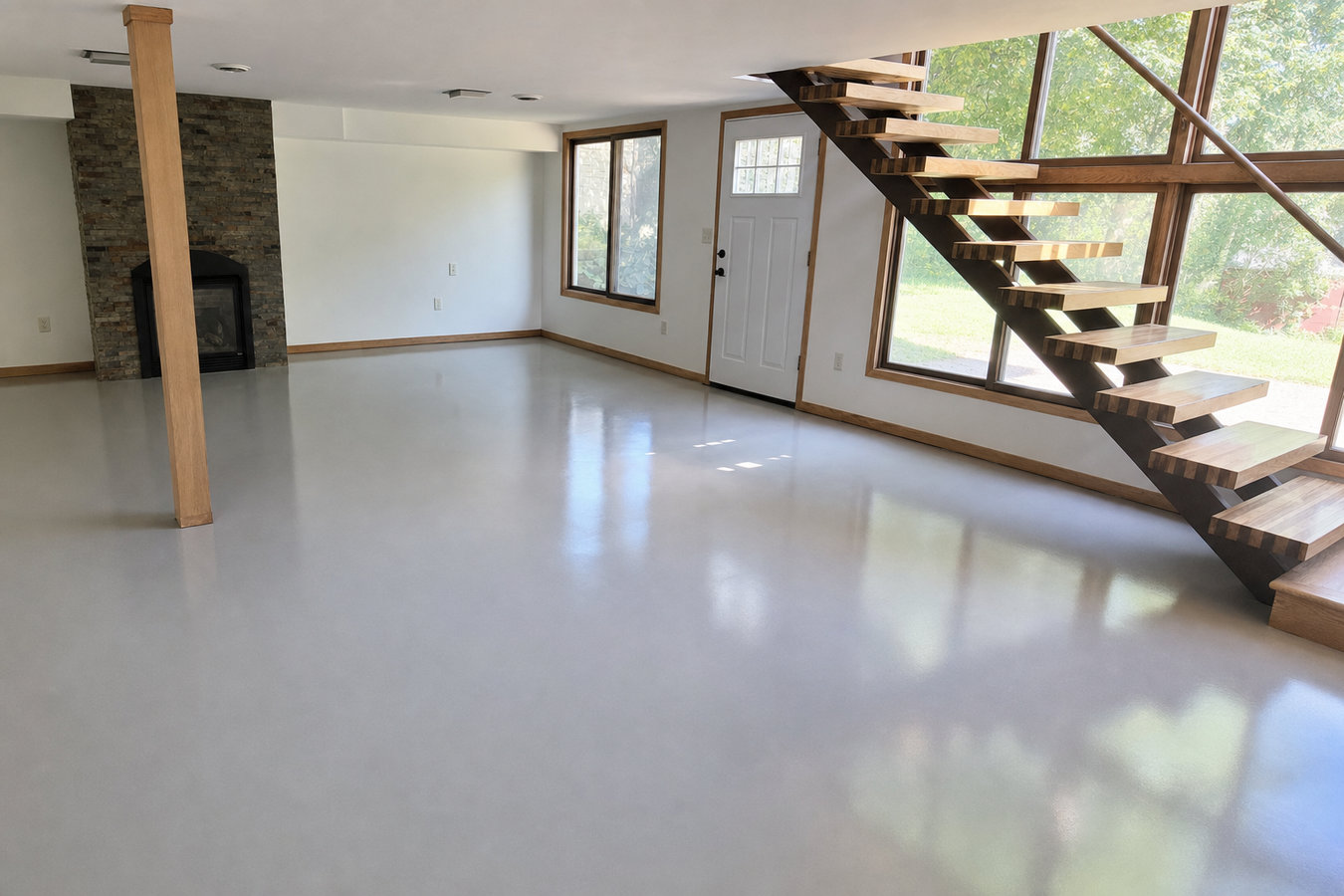
Bare concrete basements in the Central Valley collect dust, show every crack, and never quite look clean. The right floor finish changes all of that - and starts with properly preparing the slab, not just covering it up.
Basement flooring in Atwater means treating the existing concrete slab rather than laying new material on top - a contractor grinds the surface smooth, checks for moisture and cracks, then applies a protective coating, sealer, or polish that makes it durable and easy to clean, and most jobs are finished in one to three days.
The most popular choices in the Atwater area are epoxy coatings, polished concrete, and concrete sealers, each suited to a different use and budget. All of them start with the same foundation: a properly prepared slab. In Atwater, that means dealing with the agricultural dust that settles into basement spaces over time, the cracks that show up from the area's clay soils expanding and contracting seasonally, and the moisture issues that can appear near the edges of town where irrigation and seasonal rain affect groundwater levels. For any basement that will become a gym, workshop, or finished living space, our concrete grinding and surface preparation service handles the critical groundwork before the finish coat goes on. And if moisture protection is a priority, pairing the finish with our concrete sealing options adds a vapor-resistant layer that keeps the floor looking good long-term.
Call or send an estimate request and we will walk your basement, assess the slab, and give you a written quote for the finish that fits your space and your plans for it.
Bare, unsealed concrete constantly sheds fine dust particles that settle on everything stored in the space and get tracked into the rest of the house. If you notice a persistent gray film on boxes, shelves, or the bottom of your shoes after being in the basement, the concrete surface is breaking down and needs to be sealed or coated.
Small cracks are common in Central Valley homes, where the clay-heavy soil expands and contracts with the seasons. If you notice new cracks appearing, or existing ones getting longer or wider, it is worth having a concrete contractor take a look before investing in any flooring finish - some cracks are cosmetic, but others signal movement that should be addressed first.
Oil drips, water stains, rust marks from metal shelving, and years of general wear leave concrete looking rough and uninviting. If your basement floor looks like it belongs in an old garage rather than a usable room, a professional surface treatment can transform it without replacing the slab.
In the San Joaquin Valley, seasonal rains and nearby agricultural irrigation can raise the water table temporarily, pushing moisture up through basement slabs. If you notice damp spots, white chalky deposits, or a musty smell after wet weather, that is a sign the slab needs a moisture-blocking treatment before any finish is applied.
We work with epoxy coatings, polyurea coatings, polished concrete, and penetrating sealers - and we recommend the right option based on your slab condition, how you plan to use the space, and your budget. A high-gloss epoxy coating reflects light and makes a basement feel brighter and larger, while a polished finish gives a more natural look with similar durability. For spaces primarily used as storage, a quality penetrating sealer seals the pores, stops the dusting, and gives you a clean surface without the cost of a decorative system.
Every job starts with thorough surface preparation through our concrete grinding and surface preparation process - no coating holds long-term on a slab that has not been properly cleaned and opened up. For basements showing moisture, we assess and apply the right vapor-blocking primer before the finish coat goes on. If you want the added protection of a dedicated sealer on top of any finish, our concrete sealing service adds that layer and extends the life of the floor significantly.
Best for homeowners converting a basement into a gym, workshop, or finished space who want a bright, durable surface that is easy to clean.
Suits those who want a refined, natural look with the same concrete slab - no coating to peel, just a ground and polished surface.
A good fit for storage-focused basements - stops dusting, resists stains, and protects the slab without a decorative topcoat.
Ideal for homeowners who need a fast turnaround - these systems cure quickly even in Atwater's summer heat and are highly resistant to chemicals.
Atwater has a significant number of homes built in the 1950s through the 1970s, and concrete slabs from that era often show decades of settling, surface wear, and minor cracking. Before any finish goes down, the slab needs to be assessed and prepared - and older slabs almost always require more grinding and patching than newer ones. The agricultural activity surrounding Atwater also generates significant fine dust that settles into basement spaces year-round. A contractor who skips thorough surface cleaning before coating is cutting a corner that will cost you later - the dust and debris embedded in the concrete will prevent coatings from bonding properly. The American Concrete Institute sets the professional standards for concrete floor preparation that guide how this work is done correctly - not just quickly.
The clay soils throughout Merced County expand and contract with the seasons, which can cause slabs to crack or shift over time. This does not mean your floor cannot look great - it means the cracks need to be addressed before any coating goes on, so the finish does not fail along those lines six months after installation. We serve Atwater and surrounding communities including Delhi and Hilmar-Irwin, and we understand the local soil conditions and housing stock that shape how this work needs to be done here.
We respond within one business day. When you reach out, we ask a few basic questions - the size of the space, what the floor looks like now, and what you plan to use the basement for. Most contractors in the Atwater area can schedule an in-person visit within a few days, and the visit itself usually takes 30 to 45 minutes.
We walk the basement, look at the slab condition, check for cracks or moisture, and measure the space. We explain what prep work is needed and walk you through finish options with the cost and timeline for each. You should leave that conversation knowing exactly what is being proposed and why.
On the day work begins, the crew thoroughly cleans and grinds the slab. This is the most important part of the job - it removes stains and contamination, opens up the surface so the coating bonds properly, and levels out any rough spots. Grinding equipment is loud and produces dust, so plan for noise and a dusty workspace for a few hours.
Once the surface is prepped, we apply the coating or finish you have chosen. After the final coat is down, the floor needs 24 to 72 hours to cure before you can walk on it or move items back in. We give you a specific timeline and care instructions, and do a walkthrough with you before we leave to confirm you are satisfied.
Free estimate, written quote, no obligation. We respond within one business day.
Coatings applied over poorly prepared slabs peel within months - we see it all the time on work done by contractors who rushed through the grinding and cleaning steps. Every basement floor we coat starts with thorough grinding, crack repair, and surface cleaning, regardless of how clean the slab looks to the eye.
Atwater summers regularly push past 100 degrees Fahrenheit, and coatings applied in extreme heat using the wrong products can bubble or peel before the first winter. We use products formulated for high-temperature environments and schedule application during cooler morning hours when conditions in the Central Valley call for it.
The clay soils in Merced County and Atwater's proximity to agricultural irrigation mean slab cracking and seasonal moisture are both common issues. We assess and address both before any coating goes down - not after you call back about a floor that is already failing.
You get a written estimate before work begins that breaks down prep, materials, and labor. If the slab turns out to need additional crack repair or moisture treatment, we tell you before we proceed - not after. The price you agree to is the price you pay unless scope changes are discussed and approved first.
A basement floor that looks good and holds up long-term comes down to preparation and the right product for the local conditions. Both of those are things we get right before any finish goes down.
The critical first step for any basement floor - removing old contamination, opening the surface, and repairing cracks so coatings bond properly.
Learn MoreAdd a moisture-resistant barrier to your basement slab or any finished concrete surface to extend its life and protect it from the elements.
Learn MoreSummer books fast in the Central Valley - reach out today and lock in your date before the heat window closes.